Syracuse's Best Bat Removal
We've been voted Syracuse's best bat removal company the past two years!
Get in touch
Bat Experts
Rapid Response
Trained & Educated
Licensed & Certified
About Syracuse Bat Removal
Welcome to syracusebat.com. We are the only qualified bat removal company in Syracuse, New York. Bats can make a mess. Their guano can make an impressive mess. While that mess is great in the wild as a source of nutrients and natural fertilizer. Those benefits aren't apparent or particularly useful if it's building up in your home due to bats roosting where they don't belong. It can take time to notice you have bats in your home, too, and by the time you do, the mess they've made can be pretty annoying. That's why we not only handle bat removal, but also post bat cleanup. Removing the bats obviously doesn't remove the mess, so we proudly sanitize, clean, and decontaminate a location after we've removed the bats so you don't have to do the job yourself. We have the experience and tools to handle bat cleanup, and we'd rather you let us do it than risk making things worse without the proper tools or training. So we provide our bat cleanup services in hopes that your home will look like the bat was never there once we've cleaned up after them. Considering our experience, that's pretty much a given. Removing bats from a person's home should be left to the experts, and so should cleaning up after them, so let us handle the bat removal and the cleanup so that you can live in a safe and clean bat free home. The bats can do what they do where it will do the most good, and we'll make sure the good they were trying to do in your home isn't an issue for long. We operate 24-7-365, so don't hesitate to call us at 315-937-1171 to discuss your bat problem and schedule a fast appointment.
Residential
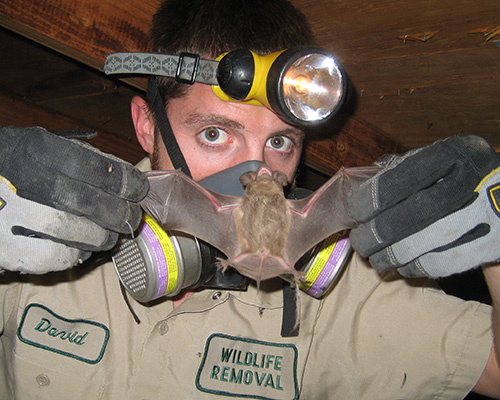
We are experts at removing bats from residential properties. Whether you have a single bat trapped in your house, a colony roosting in your attic, and/or various other problems, there is no need to worry! During our removal process, we make sure to inspect your entire home carefully, tracking down all the entrypoints bats are using to invade your place. Next, we perform a process called live exclusion (where no bats are harmed and all exit your property), then seal all entry holes completely shut. We also take care of the cleanup process after, so your home is safe and clean!
Learn MoreCommercial
Besides residential areas, we also have a wealth of experience removing bats from commercial properties! We begin by investigating the area for possible bat entrances, covering holes even as small as 1/4 of an inch. Through our live exclusion process, bats leave the building through one-way exits, and we seal up every hole afterward. Once the bats have been removed, we perform a cleanup process. This includes dealing with guano, replacing damaged insulation, and decontaminating the place.
Learn More
Contact us for bat removal today!
What Our Customers Say
I had a bat flying around in my house at 9pm, and CITY bat removal came right out and caught it in a net.
Sarah Lakewood
I had an annoying colony of bats stuck in my attic for a while before I finally decided to call for help. They were able to quickly and thoroughly solve the problem!
Brandon Chung
They did a great job clearing my attic of bats and didn't hurt any of the creatures.
Charlotte Demers
The technicians at CITY Bat Removal are skilled, professional, and know exactly what they're doing. Would highly recommend.
Mark O'Connor
My house stank of bats and their guano inside my wall. CITY Bat Removal not only removed the bats, they also got rid of the smell!
Alexis Ramirez
.jpg)
Should you ever trap a bat in a cage?
The Problem with BatsWhen bats enter a person's home, they're going to cause a lot of problems.
These animals will spread diseases like rabies and histoplasmosis. They'll also leave their droppings all over the place, resulting in awful smells, stains, and structural damage.
That's why you should act quickly if you find a bat inside your home, as you don't want to give them more opportunities to cause trouble.
The Appeal of Traps and Cages
A lot of people like to take a hands-on approach by trapping bats in cages. It feels like you're actively working towards the solution, and the approach lets you see the bat population dwindle. For many, this approach seems humane as well, since you aren't really killing or hurting the animal.
Yet things aren't so simple.
The Problem with Cages
Unfortunately, traps and cages have a lot of downsides, since they're illegal, ineffective, and inhumane.
Most states have made it illegal to trap bats, as these animals are surprisingly beneficial. A single bat eats thousands of bugs a night, removing agricultural pests and killing spreaders of disease. Many bat species are also endangered, so there are even more reasons to make trapping them illegal.
Using cage traps is also ineffective. Most bat infestations are made up of many individuals, so you'd need to buy a lot of traps — something which isn't very feasible. Even if you catch the bats, you'd have to get rid of them by relocation. Yet that would quickly fail because bats have excellent navigation and will find their way back. That isn't even mentioning the risks of being scratched and contracting rabies from handling the animals in a cage.
Finally, cages can be very inhumane. Bats are flying animals like birds, so a cage restricts their movement and makes them feel trapped. These mammals also have a high metabolism, so they'll quickly get hungry. Meaning there's a high chance of them starving while stuck in a cage.
For all these reasons, you shouldn't trap bats in a cage. Instead, you should look for alternative bat removal techniques.
Exclusion
Exclusion is by far the best way of removing a bat infestation, and it's incredibly humane and effective.
This technique works by allowing bats to leave of their own free will while preventing them from coming back in. Meaning, the animals won't be able to do anything even if they find their way to your home.
Exclusion is also inexpensive, as it only needs three items.
-
An exclusion funnel — or some other exclusion device.
-
Some caulk.
-
Steel wool.
Your home must have at least one path that allows the bats to come and go as they will. Bats will use this during the evening to go out hunting, and they'll use it again to enter your home at dawn.
It's important you find all such holes if you want to get rid of the bats.
Step 2: Seal the Entries
Now that you've found all the holes, you should seal them up. Use the steel wool and caulk — or any other material you'd prefer — to seal up the entries. The important thing to keep in mind is that you should leave exactly one entry open, as you'll need to get rid of the bats somehow.
Step 3: Install the Device
With most entries sealed up tight, it's time to install the exclusion device. If you're using an exclusion funnel, place the wide end pointing indoors and the narrow end pointing outdoors. This stops the animals from coming back in after they leave.
If you've spotted any baby bats in your home, you should not do this step. Instead, wait a few weeks for them to grow up before you install the device. Otherwise, the animal will be abandoned, so it will starve to death.
Step 4: Wait for the Bats
With the device installed, you only have to wait for the bats to leave.
Step 5: Clean and Repair
Once all the bats are gone, remove the exclusion device and seal the final hole as before. You should then carefully clean and disinfect the area to prevent the spread of diseases.